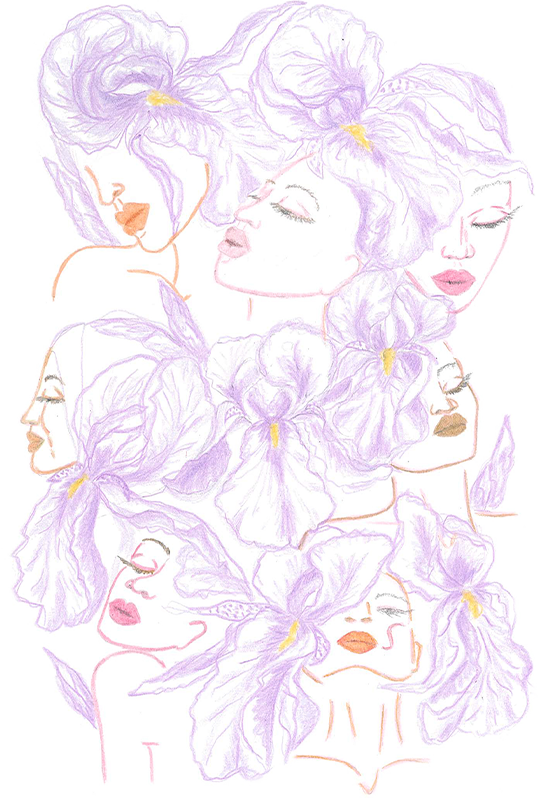
Illustration by Kateryna at Peggy’s Place.
Illustration by Kateryna at Peggy’s Place.
Delivered in partnership with housing and community services across Brisbane and Logan, Australia, the music program creates safe, inclusive, and trauma-informed spaces where women can connect, express themselves, develop new skills, and rediscover hope. Through songwriting, singing, drumming, guitar, ukulele, and shared musical experiences, participants strengthen wellbeing, build confidence, foster meaningful relationships, and reconnect with their aspirations for the future.

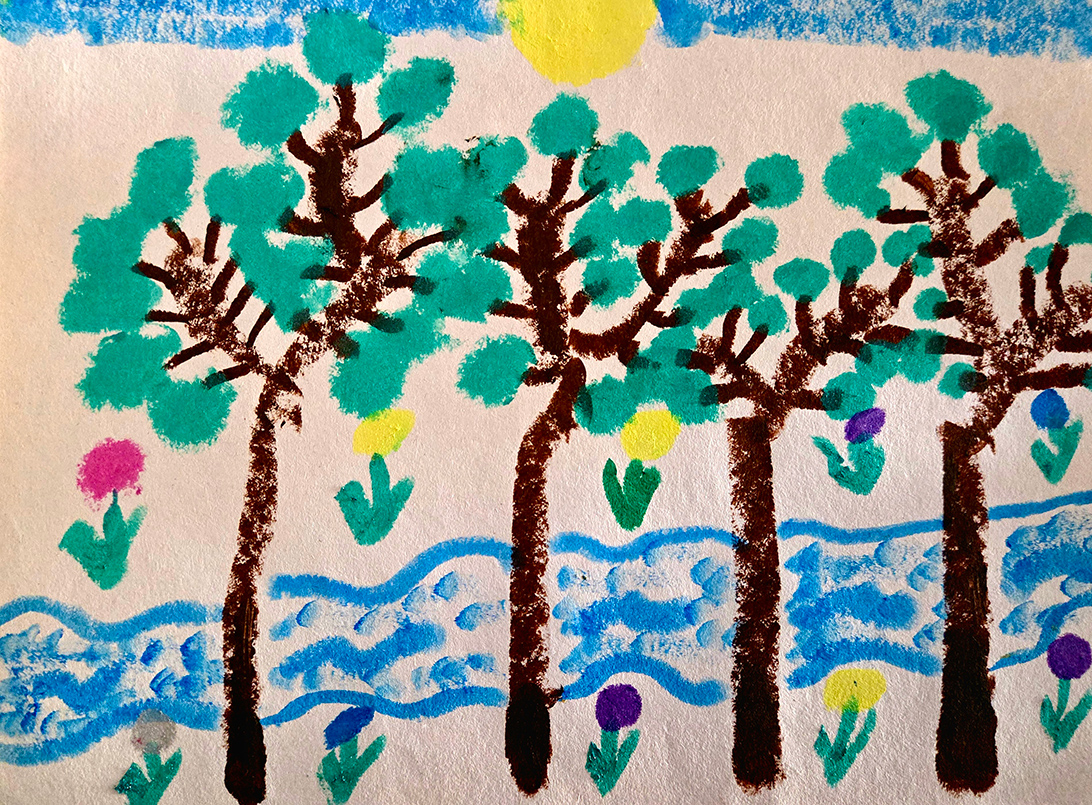
Participant drawing reflecting on the music program at FamilyLinQ.
The Creative Transitions pilot was delivered across two transitional housing sites and two community sites. The transitional housing settings are specifically focused on supporting women, and often their children, who have experienced housing insecurity and homelessness (in the case of Peggy’s Place, because of domestic and family violence). The two community sites support women and children experiencing disadvantage, including housing insecurity, DFV, risk of homelessness, and other complex challenges.
Bardon
Peggy’s Place is a refuge and transitional accommodation service for women and children escaping domestic and family violence. Established to address a critical gap between crisis accommodation and independent living, the service combines safe housing with holistic, trauma-responsive support. Women and children can access counselling, health and wellbeing services, legal and housing assistance, opportunities for social connection, and pathways to employment, education, and financial stability. Through a dignity-centred approach, Peggy’s Place supports women and children to rebuild their lives, strengthen self-determination, and move towards long-term independence. Creative Transitions was integrated into this environment, providing opportunities for creative expression, connection, and healing through music.
Learn more
Slacks Creek
This site provides safe and affordable social housing for individuals and families experiencing disadvantage, housing stress, or risk of homelessness. Alongside housing support, families can participate in an on-site playgroup that offers a welcoming space for parents and children to connect, learn, and grow together. Grounded in a strengths-based approach, the playgroup supports parenting confidence, child development, social connection, and access to wider community supports. Creative Transitions complemented these goals by creating shared musical experiences that fostered wellbeing, parent–child connection, and peer support.
Learn more
Logan
Young Mum’s Squad is a weekly support and social program for young mothers in Logan and surrounding communities. The program provides a safe and inclusive environment where participants can build friendships, develop practical skills, share experiences, and access support. Designed to reduce isolation and strengthen community belonging, the program empowers young mothers to navigate the challenges of parenting with increased confidence and resilience. Through music-making and creative participation, Creative Transitions enhanced opportunities for self-expression, social connection, and collective wellbeing.
Learn more
Kingston
FamilyLinQ is an integrated, school-based community hub that brings together education, health, early childhood, and family support services through a single welcoming access point. Developed in response to community needs, the hub supports families experiencing disadvantage by improving access to coordinated wrap-around services. As part of the hub, families participate in supported playgroup activities that strengthen parenting confidence, promote child development, and foster social connection. Creative Transitions was embedded within this setting, using music as a vehicle for connection, learning, wellbeing, and community participation for both parents and children.
Learn more
Contact Brydie-Leigh Bartleet for further information
b.bartleet@griffith.edu.au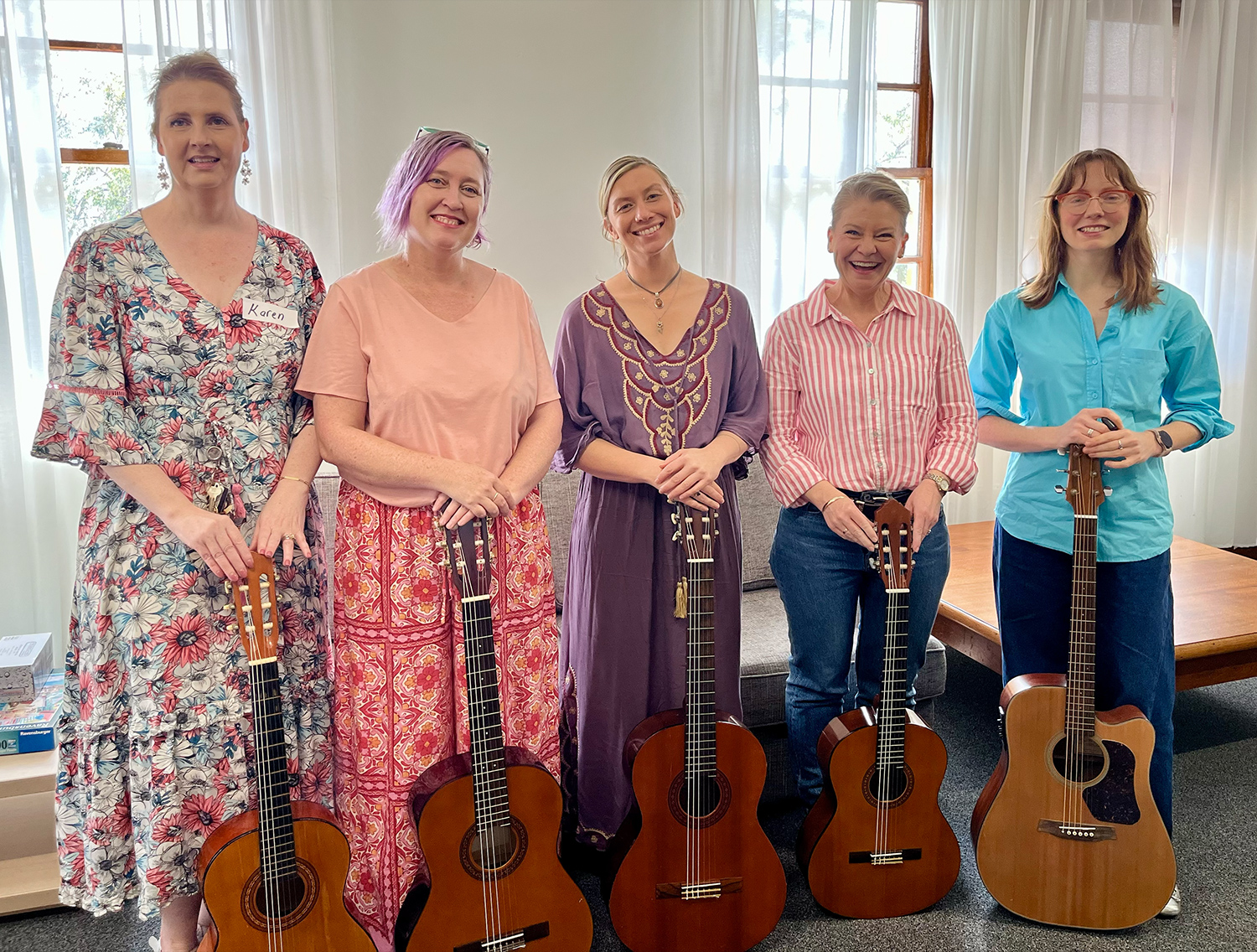
Left to right: Karen, Sarah, Ali, Brydie, and Libby, with a donation of guitars at Peggy’s Place.
Creative Transitions brings together a multidisciplinary team of researchers, music therapists, health promotion specialists, and professional musicians who share a commitment to using creative arts to support wellbeing, connection, and social change. The team were assisted by support staff at all program sites.
Project Lead
Professor Brydie-Leigh Bartleet is an internationally recognised researcher whose work explores how music and the arts can foster social justice, inclusion, equity, and wellbeing. With more than 25 years of experience, she has led numerous community-engaged research projects focused on supporting people experiencing disadvantage, displacement, and social exclusion.
Lead Music Facilitator
Sarah Dunston is a registered music therapist, educator, and researcher with more than a decade of experience working with children, families, and communities affected by adversity. Her trauma-informed, strengths-based practice centres on healing, connection, resilience, and creative self-expression.
Senior Research Assistant
Dr Libby Myers is a guitarist, composer, educator, and researcher whose work focuses on artistic research, musical identities, and community music. She has extensive experience working across research, performance, and education settings, including projects supporting marginalised communities and advancing social justice through the arts.
Researcher
Dr Emma Heard is a qualitative researcher and health promotion practitioner with expertise in gender equity, health equity, and social connection. Her work spans community, government, and higher education sectors, with a strong focus on participatory and arts-based approaches to health and wellbeing.
Researcher
Anikka Way is a Kamilaroi qualitative researcher and health promotion practitioner committed to First Nations-led and culturally grounded approaches to wellbeing. Her work focuses on co-design, health equity, and strengths-based research that supports positive outcomes for communities and young people.
Songwriting Facilitator and Musician
Ali Crane is a Brisbane-based singer, guitarist, and songwriter with more than 20 years of performance experience across community, corporate, and creative settings. As a songwriting facilitator on Creative Transitions, she co-created original songs with participants at Peggy’s Place, supporting women to share their stories, build confidence, and connect through the power of music.
Songwriting Facilitator and Musician
Hughie Doherty is a Brisbane-based musician, songwriter, and educator who has been performing and working in music for more than a decade. As a songwriting facilitator on Creative Transitions, Hughie worked alongside Mums and children at YFS to co-create an original song, using music as a tool for bonding, co-regulation, connection, and self-expression
Creative Transitions has been supported by an expert Advisory Group
YFS
Griffith University
Lady Musgrave Trust
Queensland Health
Queensland Health
Edmund Rice Education Australia
Peggy’s Place
Creative Transitions is led by the Creative Arts Research Institute and Queensland Conservatorium Griffith University in partnership with the Women and Girls’ Health Promotion Program, Peggy’s Place, Lady Musgrave Trust, and YFS.
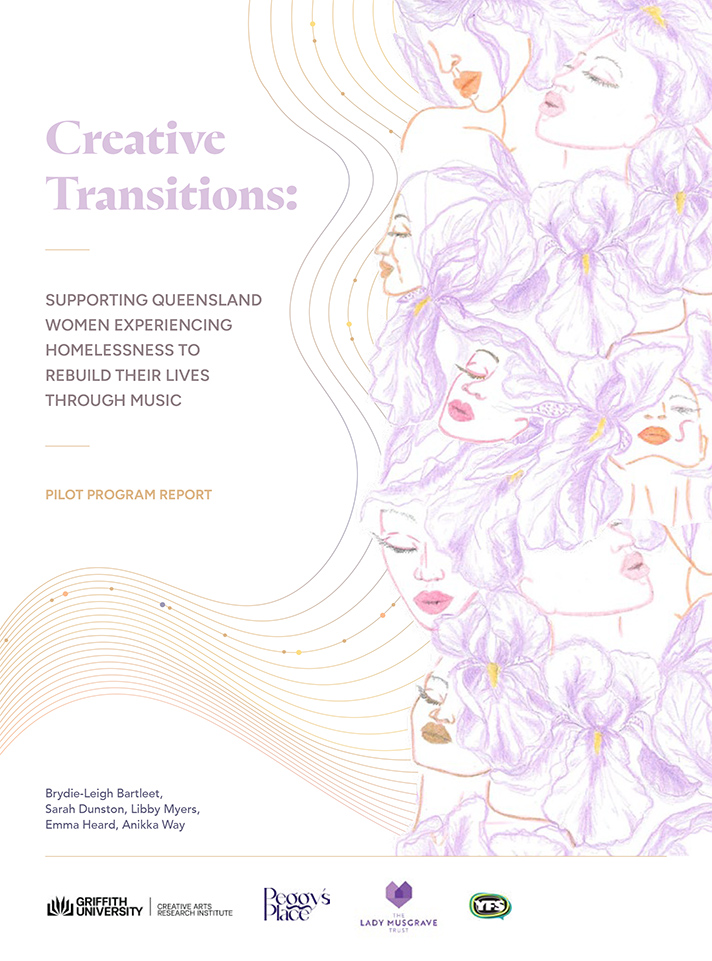 Pilot Program Report
This full report shares findings from the pilot music program supporting women transitioning out of homelessness. The report highlights how trauma-informed music-making helped foster emotional wellbeing, confidence, social connection, and hope, while providing practical recommendations for the homelessness, health, arts, and community service sectors. Through participant stories, research insights, and creative outputs, the report demonstrates the powerful role music can play in supporting recovery, belonging, and pathways towards a brighter future.
View PDF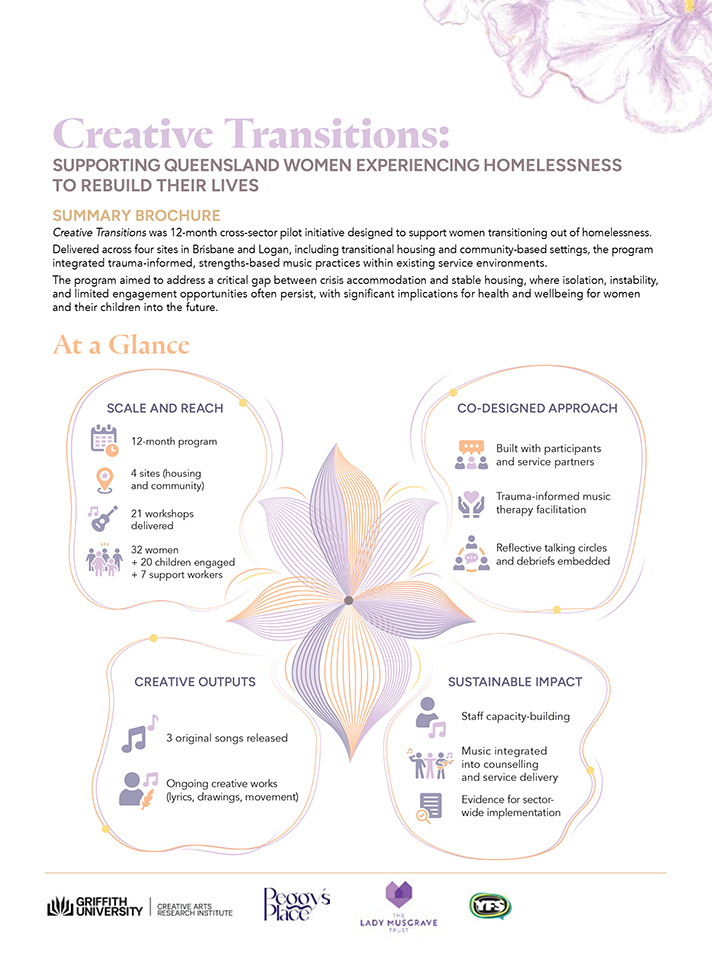 Summary Brochure
This summary provides a concise overview of the program, its research findings, and key outcomes. It highlights how trauma-informed music-making supported women transitioning out of homelessness to build confidence, strengthen social connections, improve wellbeing, and reconnect with hope for the future. Designed as an accessible companion to the full report, the brochure shares the program’s impact, creative outputs, and key recommendations for the homelessness, health, arts, and community sectors.
View PDF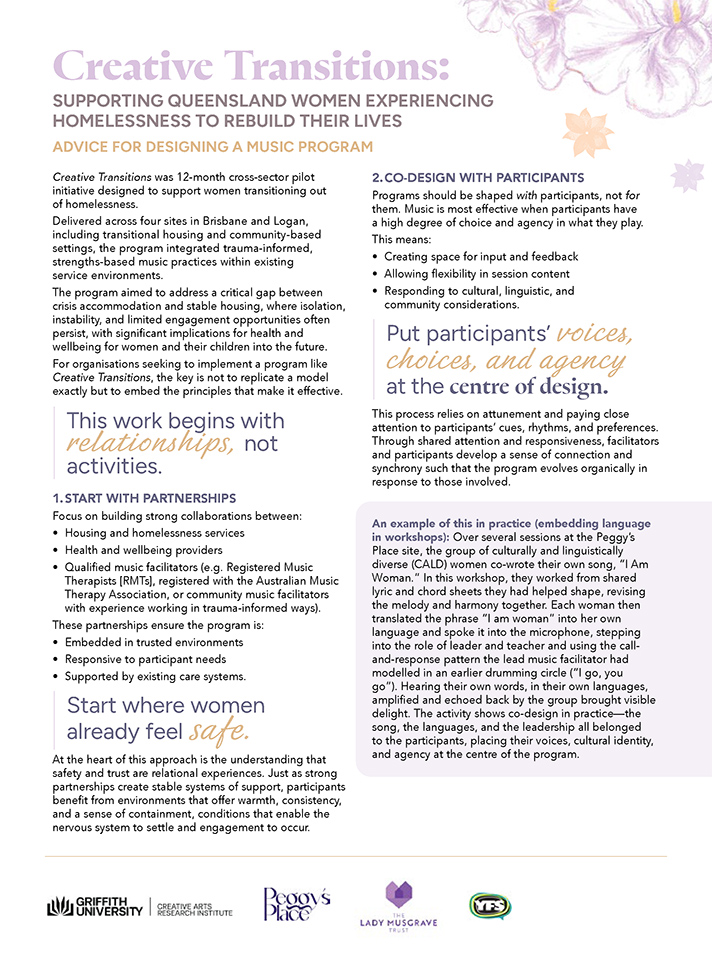 Advice for Designing a Music Program
This practical guide distils the key lessons from the Creative Transitions pilot program into accessible advice for organisations interested in using music to support wellbeing, recovery, and social connection. It outlines seven core principles—including building partnerships, co-designing with participants, using trauma-informed practices, and embedding programs within existing services—while providing real-world examples and practical strategies for implementation. Designed for homelessness, community, health, and arts organisations, the guide offers a roadmap for creating safe, inclusive, and meaningful music programs that foster connection, agency, and hope.
View PDF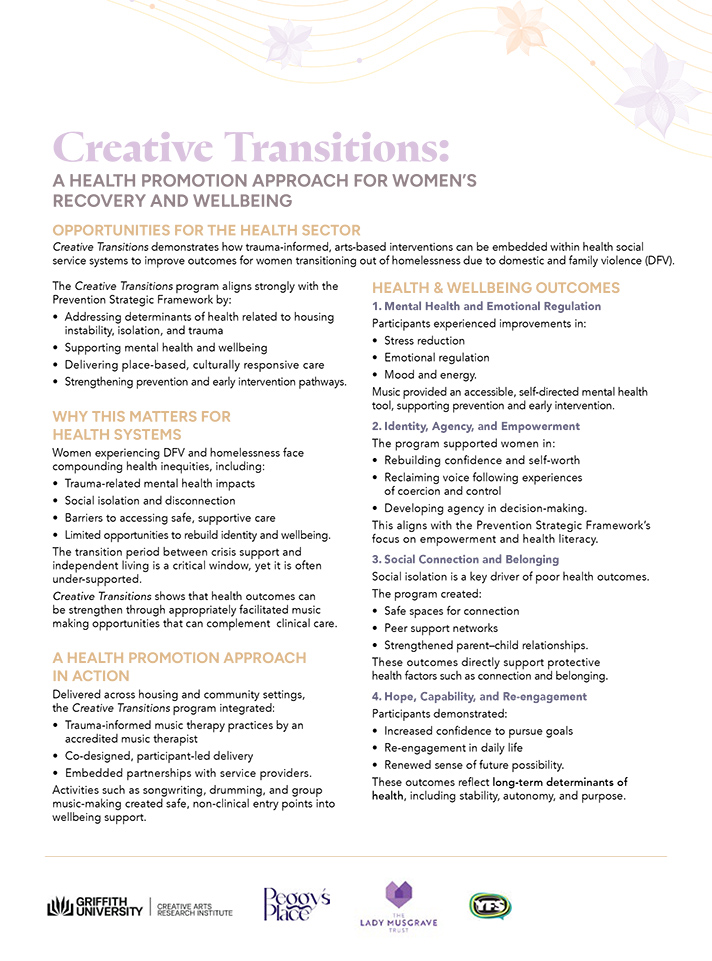 Health Promotion Resource
This guide provides a concise overview of the program’s health promotion outcomes and implications for policy and practice. It highlights how trauma-informed, arts-based approaches can support women transitioning out of homelessness by improving emotional wellbeing, strengthening social connection, building confidence and agency, and fostering hope for the future. The summary also outlines key lessons for health systems, demonstrating the value of embedding creative, culturally responsive, and preventative approaches within housing, health, and community services.
View PDFThese creative works amplify participants’ voices, support confidence and skill development, and make visible the often-unseen impacts of strengths-based, trauma-informed arts programs.
They also help demonstrate the value of creative approaches within the homelessness and domestic and family violence sectors, supporting advocacy, program sustainability, and future investment.
- Ali Crane and the Creative Transitions Project (created with participants at Peggy’s Place)
YouTube Apple Music Spotify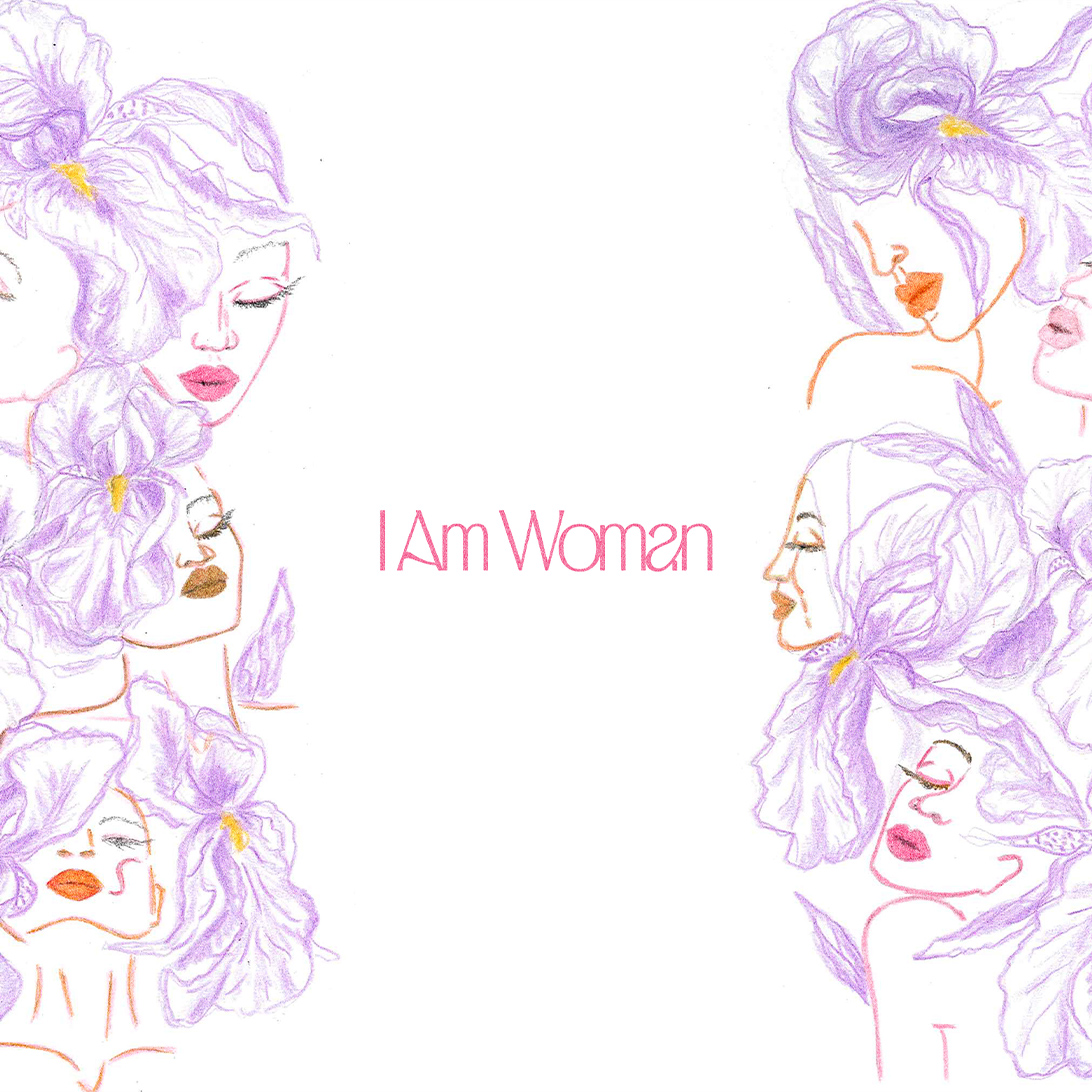
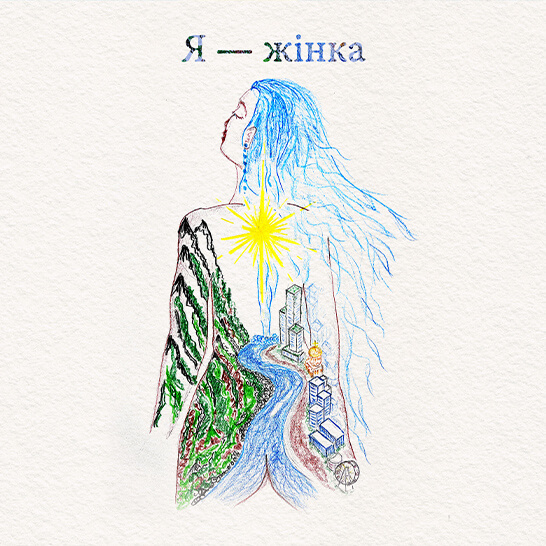
- Kateryna and the Creative Transitions Project (created with participants at Peggy’s Place)
Apple Music Spotify- Hughie Doherty and the Creative Transitions Project (created with mums and children at FamilyLinQ)
Apple Music Spotify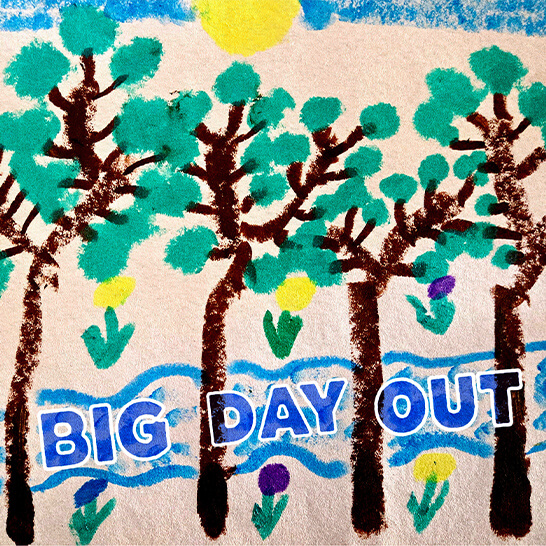
To find out more about Creative Transitions, you’re welcome to contact the Project Lead Professor Brydie-Leigh Bartleet
b.bartleet@griffith.edu.au